The sweet white pulp wrapped around each bean.
- Usually
- It drains out of the fermentation box and goes down the drain.
- Here
- We collect it the same day, before it ferments on its own.
Guamal, Meta · Colombia
The pulp gives the wine. The bean, the chocolate. The husk, the tea. Three materials from the same pod, made by hand in Guamal.
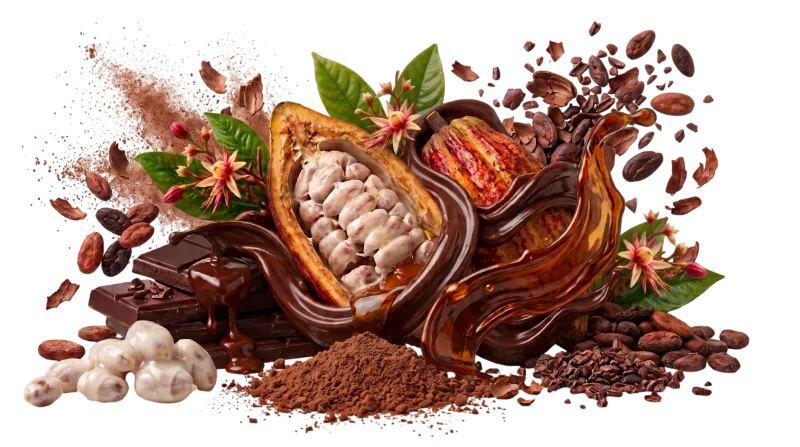
The chocolate industry only uses the seed. We use all three materials of the fruit, and none of them is thrown away.
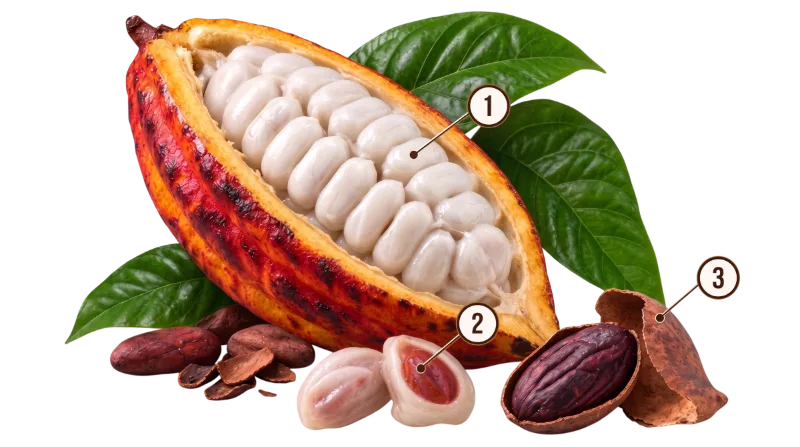
The sweet white pulp wrapped around each bean.
The seed, and the only part the chocolate industry uses.
The thin skin the bean sheds when roasted.
It all comes from the same farm and passes through the same hands. It is fermented, dried and transformed without hurry and in small batches, because that is the only way each product tastes the way it should.
From the husk
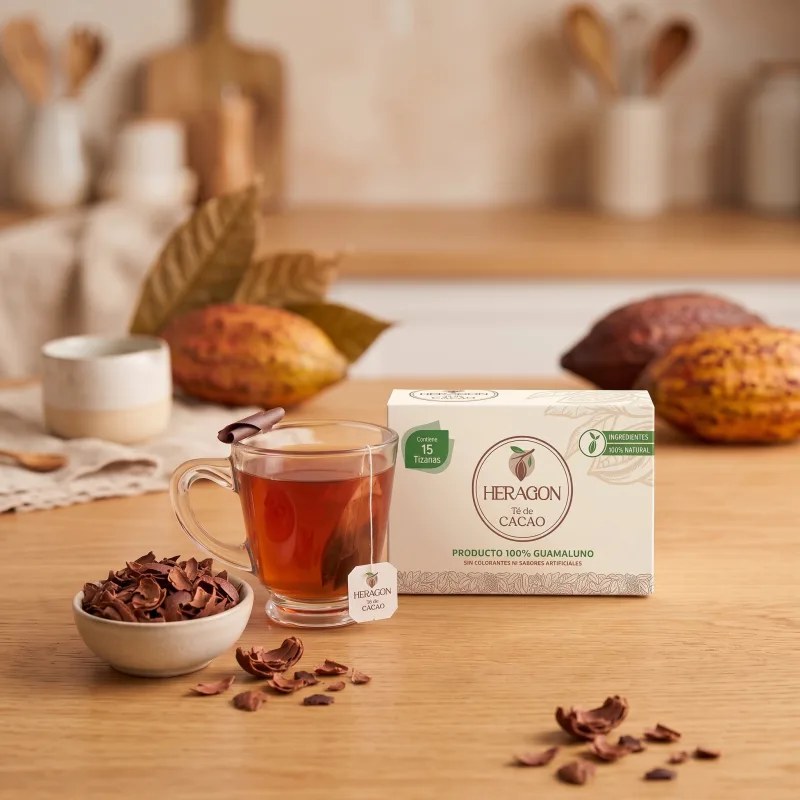
The thin skin the bean sheds as it roasts, gathered straight from the roaster and sun-dried. It smells of chocolate, tastes mild and carries no caffeine at all.
THE INSIGNIA
From the pulp
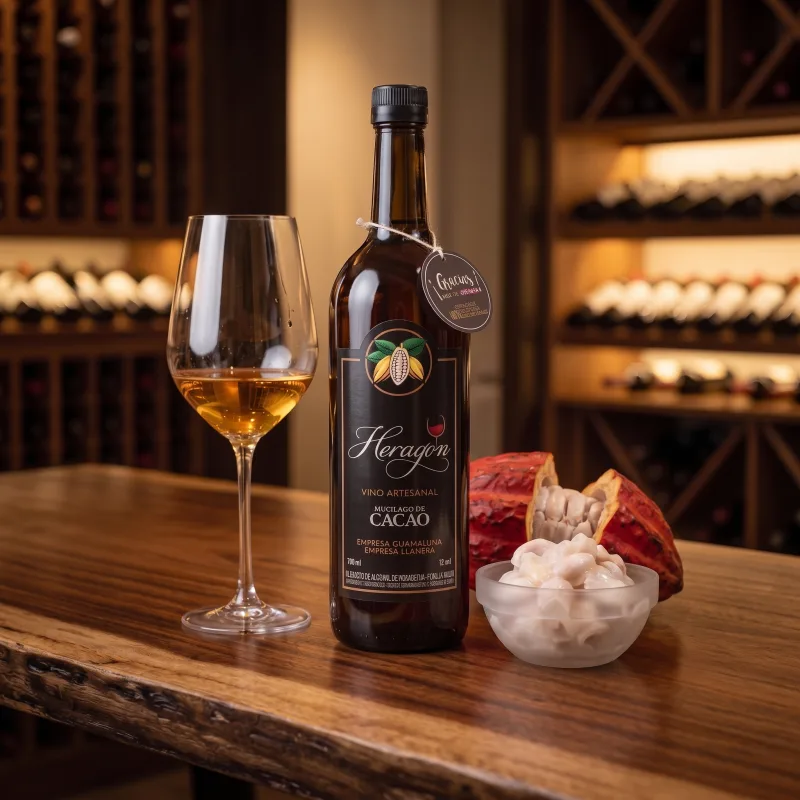
From the pulp, collected the same day the pods are cut, before it ferments on its own in the box. Dry, with ripe fruit, and no chemicals or preservatives. It is the product everything started with.
From the pulp
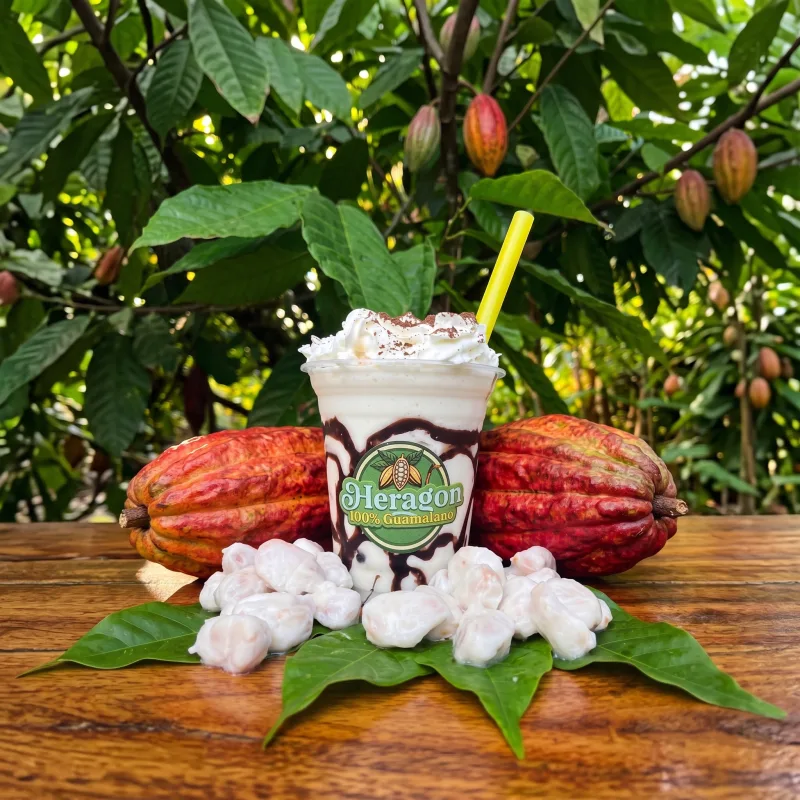
Cold, thick and tasting of real cacao. It is blended on the spot and drunk right there: there is no way to keep it or to send it.
Each one has its own process and its own exact point. What fits here is only a sample.
In February 2024, in Amsterdam, the cacao of Guamal won gold at the Cacao of Excellence Awards. It was up against 222 samples from 52 countries, and only fifty reached the final.
Behind it are nine hundred farming families organised in a cooperative, and a genetics programme that took thirty years. Meta produced 460 tonnes in 2004, when frosty pod rot and the armed conflict all but ended the crop; in 2024 it passed three thousand.
The recognition does not belong to a company: it belongs to the town and to the families who grow it. Heragon is part of that fabric and works the same cacao, on the same land.
Gold
Amsterdam · February 2024
The flavour of cacao does not come inside the seed: it is built over these five steps. A badly fermented or badly dried bean is something no chocolate can fix.
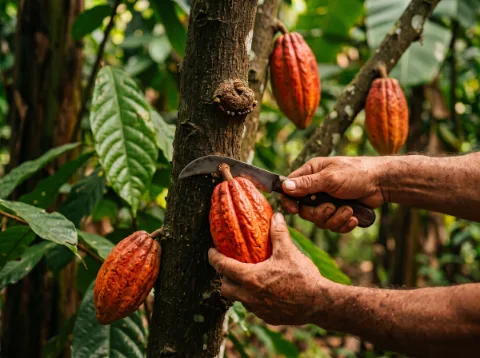
Only the pods that are ready are cut: the colour says when. They are all gathered in one place, and everything else starts from there.
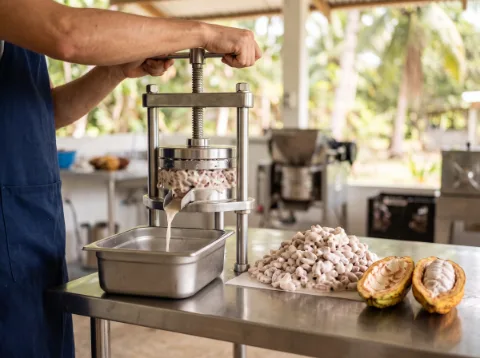
The pods are split open and the beans come out wrapped in their pulp. A press separates the liquid — the mucilage — but the beans are not washed: the pulp left on them is what will ferment them.
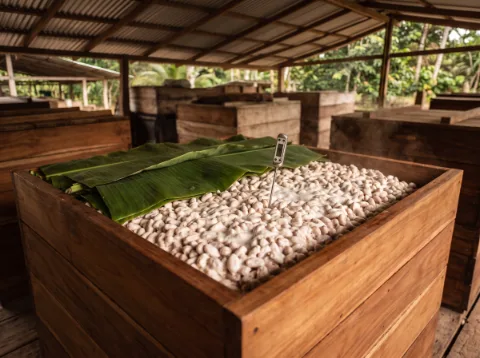
The beans go into a wooden box with the pulp they carry. Three to five days, depending on the cacao. It is where they gain their flavour, and the only thing added is time.
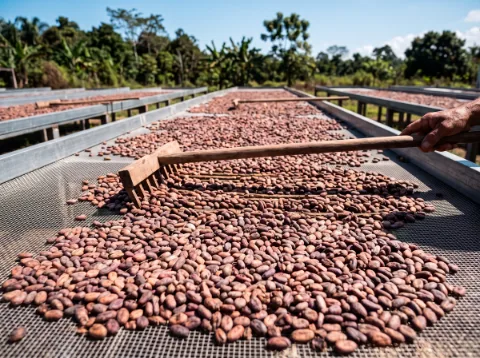
They come out of the box damp. They are spread in the sun and turned for days until the water is gone: without drying properly they cannot be worked or stored.
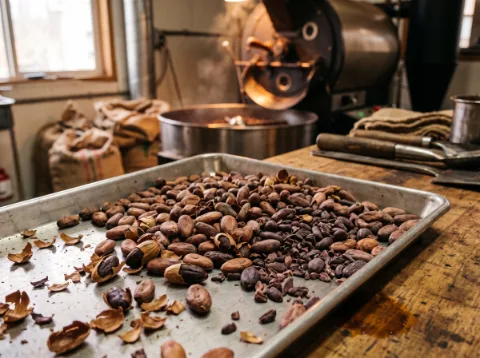
The heat loosens the thin skin around the bean. Everywhere else it is swept up and thrown away; here it is kept. What is left is the clean bean, ready to work with.
Behind every one of those steps there are three people from the same household, and a reason why they started doing it this way.
The workshop is three kilometres from the centre of Guamal, on the Pío XII road. That is where the pod is opened, fermented in a wooden box, dried in the sun and bottled: the whole process happens in one place.
Everything is done by hand and in small batches. Each product has its own recipe and its own timings, and keeping to them is what makes next year’s bottle taste like this one.
Anyone who stops by is welcome: we will tell you what is available and you can buy right there. What we do not run are guided tours of the workshop, because it is in use.
Coordinates3.9039° N · 73.7962° O
The road through the vereda is not always signposted. The link opens the location on your phone and plots the route from wherever you are.
We take our products to farmers markets, fairs and congresses. That is where you can taste before buying and ask whatever you want.

Coming up
from 8:00 AM to 1:00 PM
A morning on the farm following cacao from start to finish: cutting pods, extracting the pulp, seeing how the beans ferment and ending with a tasting of the wine and chocolate they become.
The family farm, Pío XII rural district · Guamal, Meta
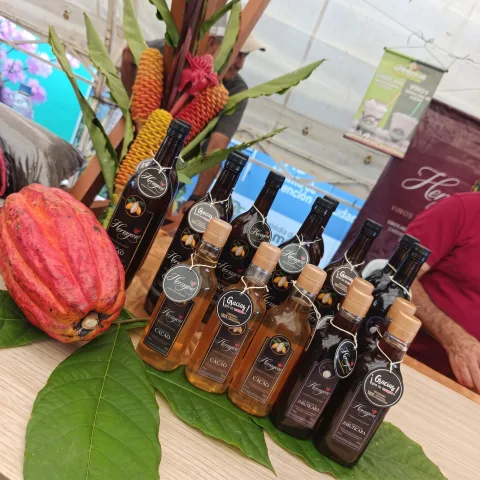
A showcase of the region’s baking and sweets. We took the chocolate bar and the table chocolate; the wine did not quite fit, but people talked about it all afternoon.
Casa de la Cultura · Acacías, Meta
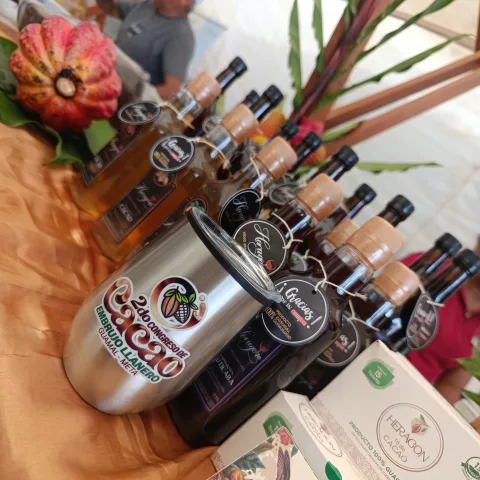
Four days of workshops, talks and a business roundtable convened by the Government of Meta and the Guamal town council, with the region's cacao as the only subject. It is the largest stage the brand has stood on.
Workshops, talks and a business roundtable · Guamal, Meta

An afternoon at the workshop making table chocolate from the bean: roasting, shelling, grinding and shaping your own tablets to take home.
Heragon workshop, Guamal town centre · Guamal, Meta
We get to more places than fit here. The full run, with photographs from every outing, has a page of its own.
Write to us and we will tell you what is available, what it costs and how it reaches you. No forms, no commitment: one message and that is it.